
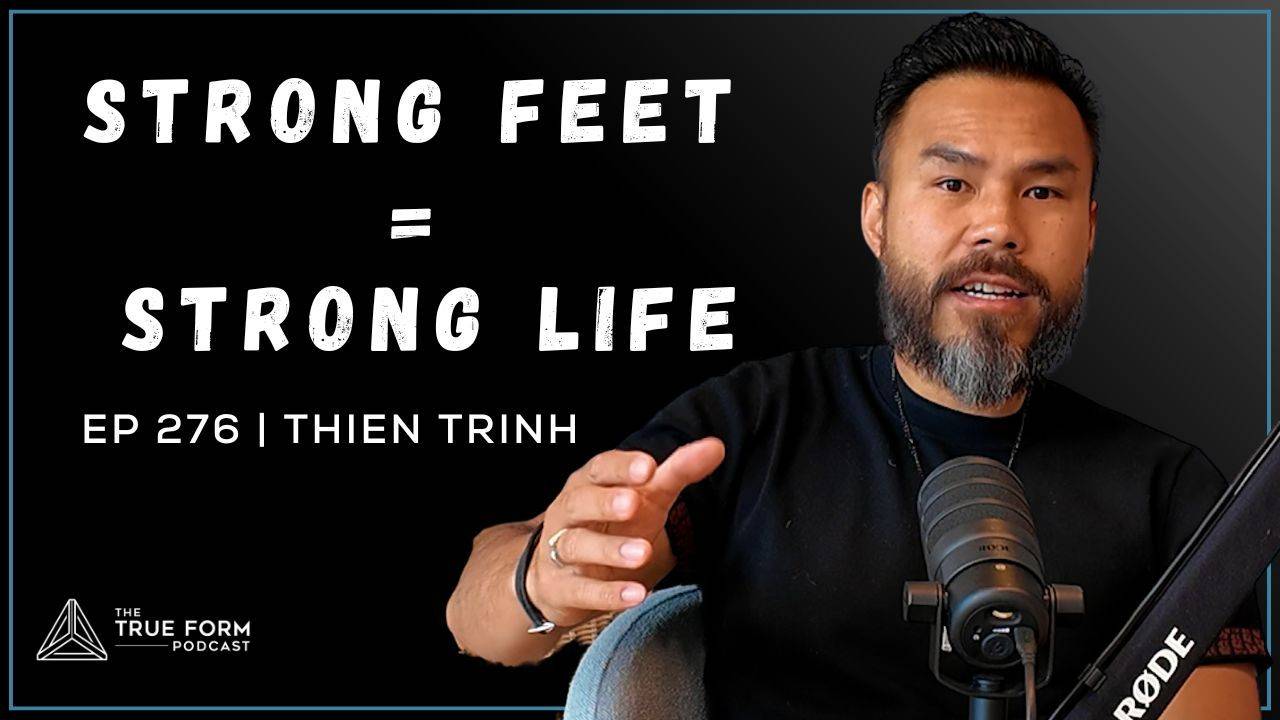
Strong Feet, Strong Life: Why Your Foundation Matters - The Truth About Foot Pain and Modern Footwear with Podiatrist Thien Trinh
Dec 14, 2025Strong Feet, Strong Life: Why Your Foundation Matters
The truth about foot pain, footwear, and human movement with podiatrist Thien Trinh
TL;DR
-
Foot pain isn’t just a foot problem, it reshapes how you move, think, and live.
-
Walking is a skill, not an automatic human ability.
-
Most foot pain is treated symptom-by-symptom instead of at the root cause.
-
“Soft and cushioned” isn’t always supportive, it can make things worse.
-
Stronger, better-functioning feet come from understanding mechanics, not gimmicks.
🎧 Available on Spotify, Apple Podcasts, YouTube or wherever you listen to your podcasts.
Watch me on YouTube
Listen to the True From Podcast
Apple Podcast -
https://podcasts.apple.com/au/podcast/the-true-form-podcast/id1593804496
Spotify -
https://open.spotify.com/show/6RVH2O6MbLOCohBKPhXO0L?si=ZI8D3MnhSfSjnohSXYN_MQ
Everywhere els -
https://trueform.buzzsprout.com 
Introduction
Most of us don’t think about our feet until they hurt. And when they do, everything changes, how we walk, how confident we feel, how active we are, and even what we believe we’re capable of.
That’s exactly why this conversation mattered.
In this episode of The True Form Podcast, I sat down with podiatrist and biomechanics specialist Thien Trinh for one of the most honest, eye-opening discussions I’ve had about movement, pain, and health from the ground up. Thien isn’t your typical podiatrist. He still practises in clinic, but he’s also built a global following by challenging how foot pain is treated, and why so many people are funnelled down the same expensive, frustrating path with little to show for it.
From growing up in a refugee family to appearing on Shark Tank Australia, Thien’s work is driven by one simple idea: if you fix the foundation, everything above it works better. Feet aren’t just “down there doing their thing” they shape posture, gait, confidence, and long-term health.
This episode matters because foot pain is incredibly common, often chronic by the time people seek help, and frequently misunderstood. If you walk, train, work on your feet, or want to stay mobile as you age, this conversation will change how you think about your body.
Lesson 1: Walking Is a Skill, Not an Automatic Ability
What It Is:
Walking looks natural, but it’s a learned motor skill. Like lifting or running, it can be done well or poorly.
Why It Matters:
Poor walking mechanics quietly overload joints, tendons, and soft tissue. Over years, this becomes pain, stiffness, and reduced mobility, often without a clear “injury moment”.
How To Apply It:
-
Pay attention to how your feet contact the ground.
-
Notice if one foot turns out or collapses more than the other.
-
Walk tall, chest open, eyes forward.
-
Let your arms swing naturally to balance movement.
-
Slow your pace occasionally to feel each step.
Pro Tip: Walking problems often show up long before pain does.
Try This Today: Take a 5-minute walk and focus only on how your feet land.
Lesson 2: Foot Pain Is Usually Chronic, Not Sudden
What It Is:
Conditions like plantar fasciitis don’t appear overnight, they develop slowly through repeated stress.
Why It Matters:
Treating chronic problems as if they’re acute leads to short-term fixes that don’t last. Pain keeps coming back because the cause hasn’t changed.
How To Apply It:
-
Stop looking for instant fixes.
-
Reflect on what your feet have been exposed to for years.
-
Consider footwear history, work demands, and training volume.
-
Reduce the most repetitive stressors where possible.
-
Think long-term improvement, not quick relief.
Pro Tip: Ignoring early pain often guarantees a longer recovery later.
Try This Today: Write down when your foot pain first appeared not when it became unbearable.
Lesson 3: Soft Cushioning Isn’t Always Supportive
What It Is:
Very soft shoes and insoles absorb force but reduce stability and ground feedback.
Why It Matters:
Your feet need resistance from the ground to work properly. Too much softness forces them to “sink” before they can push off, increasing strain.
How To Apply It:
-
Be cautious of shoes marketed purely on comfort.
-
Test stability by standing on one foot, do you wobble more?
-
Choose shoes that feel firm but not harsh.
-
Avoid extreme cushioning for everyday walking.
-
Match shoe choice to your environment and activity.
Pro Tip: Comfort today can mean weakness tomorrow.
Try This Today: Compare how stable you feel barefoot versus in your softest shoes.
Lesson 4: Insoles Should Enhance Movement, Not Lock It In
What It Is:
Overly rigid orthotics can splint the foot, forcing it into one position all day.
Why It Matters:
Feet are meant to move, flatten, and adapt with every step. Locking them down removes natural function and can shift problems elsewhere.
How To Apply It:
-
Avoid devices that feel like hard plastic plates.
-
Look for insoles that allow controlled movement.
-
Ensure they match your shoe size and shape.
-
Pair insoles with appropriate footwear.
-
Reassess if pain moves rather than improves.
Pro Tip: Flat feet aren’t automatically a problem, immobile feet are.
Try This Today: Check whether your foot can naturally spread when standing.
Lesson 5: Barefoot Is Helpful, But Context Matters
What It Is:
Barefoot and minimalist shoes encourage natural movement, but modern environments aren’t natural.
Why It Matters:
Concrete, tiles, and hard flooring didn’t exist for most of human history. Feet need help adapting to these surfaces over decades.
How To Apply It:
-
Spend time barefoot at home if comfortable.
-
Transition slowly into minimalist shoes.
-
Avoid sudden changes if you’ve worn raised heels for years.
-
Stretch calves and Achilles regularly.
-
Choose footwear that balances feel and protection.
Pro Tip: “Natural” doesn’t mean “all or nothing”.
Try This Today: Check the heel height of your everyday shoes.
Mini Case / Example
“Foot pain doesn’t just hurt, it controls your day, your mood, and your goals.” - Thien Trinh
Another moment that stood out was when Thien described how many people cry after finally walking pain-free for the first time in years, not because of the foot itself, but because of what they’d quietly lost along the way: confidence, freedom, and trust in their body.
Quick Wins Checklist (Do These Today)
-
Walk barefoot for a few minutes on a safe surface
-
Check your shoe heel height
-
Notice where your foot pressure sits when standing
-
Replace one “comfort-only” shoe choice this week
-
Pay attention to walking posture, not speed
Closing Insight
Strong feet aren’t about trends, gimmicks, or extremes. They’re about restoring function, confidence, and trust in your body over time. When your foundation works well, movement feels easier, posture improves, and pain stops dominating your thoughts. This episode was a reminder that real health starts with small, grounded changes and that taking your feet seriously might be one of the most underrated decisions you’ll ever make.
Listen to the full episode: 🎧 Available on Spotify, Apple Podcasts, YouTube or wherever you listen to your podcasts.
🎧 Available on Spotify, Apple Podcasts, YouTube or wherever you listen to your podcasts.
Watch me on YouTube
Listen to the True From Podcast
Apple Podcast -
https://podcasts.apple.com/au/podcast/the-true-form-podcast/id1593804496
Spotify -
https://open.spotify.com/show/6RVH2O6MbLOCohBKPhXO0L?si=ZI8D3MnhSfSjnohSXYN_MQ
Everywhere els -
Become The Ultimate
High Achiever
9 simple strategies to boost your energy, focus, and recovery — based on expert insights from 250 episodes of The True Form Podcast
We hate SPAM. We will never sell your information, for any reason.
