
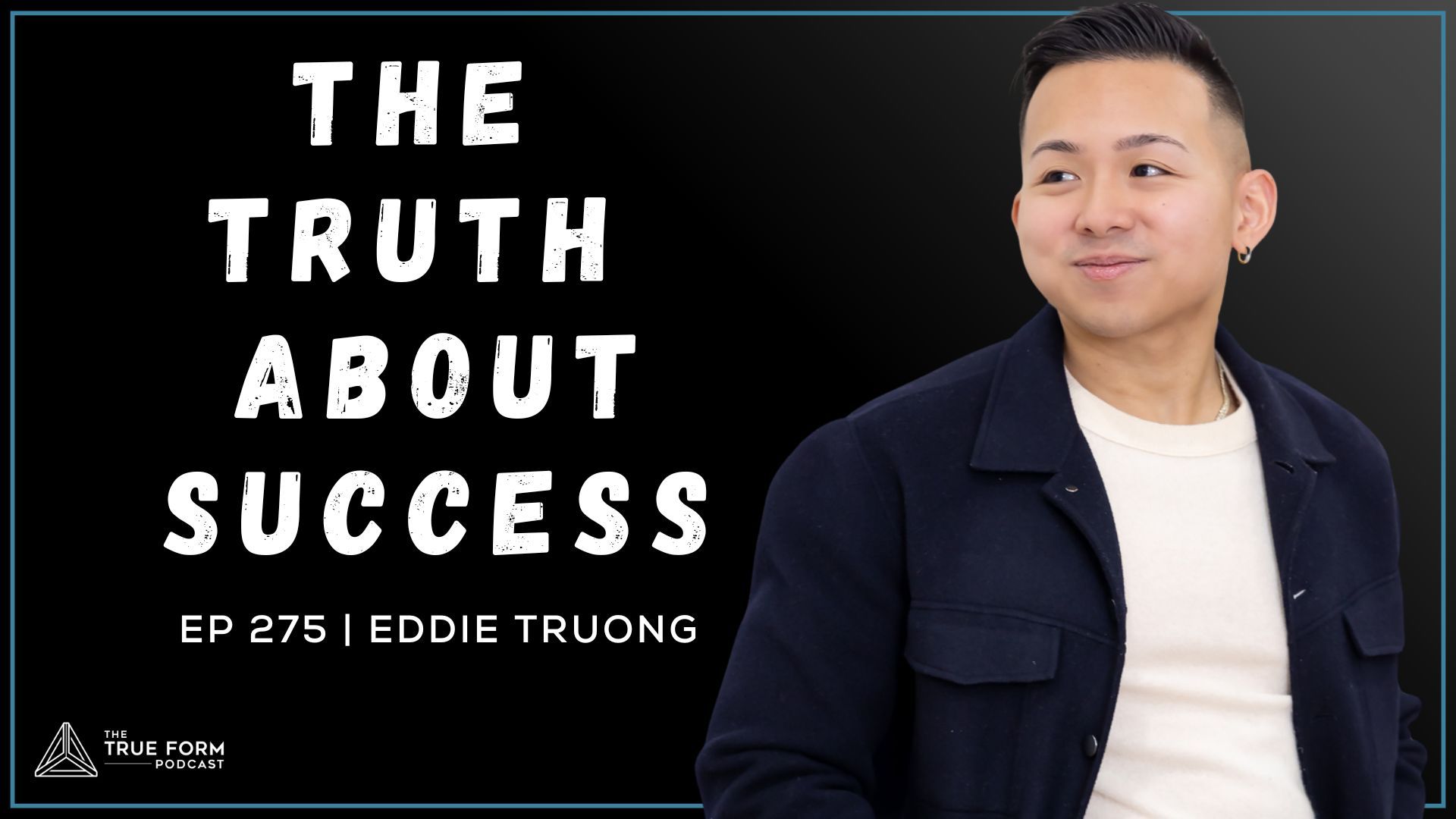
Why Success Never Feels Like Enough (And What To Do About It)
Dec 07, 2025How inner peace, identity and simple daily practices can change the way you chase your goals.
TL;DR
-
Chasing bigger goals without feeling whole on the inside is why success often feels flat or disappointing.
-
Your self-worth can’t be safely tied to numbers, titles or body fat; it needs a deeper foundation.
-
Empowerment, gratitude and a clear picture of your “highest self” give you a stable inner base to grow from.
-
Simple daily practices, Like a short morning routine and body-based mindfulness, help you stay present instead of stuck in your head.
-
When you build from the inside out, success becomes an expression of who you are, not a desperate attempt to prove your value.
Introduction
If you’ve ever hit a goal, a promotion, a number on the scales, a download milestone and thought, “Is that it?”, you’re not alone.
On paper, my guest for this episode, Eddie Truong, had what many people dream of. He left Vietnam as a teenager on a full scholarship, built a six-figure engineering career, invested in property, and ticked all the boxes of conventional success. But inside, he was burnt out, anxious and quietly falling apart. The life he’d worked so hard to build didn’t feel anything like the peace and fulfilment he’d imagined.
In our conversation on The True Form Podcast, Eddie. Now an Inner Transformational Coach and founder of E.R.A. Coaching shares how he rebuilt his life from the inside out. We talk about why success without inner peace will always feel fragile, how high performers get trapped in the “next milestone” game, and what it takes to feel whole before the goals arrive. We also explore why your physical health is the foundation of emotional resilience, the power of gratitude when life is hard, and how to design and live from your “highest self”.
This article pulls out the key lessons from that conversation and turns them into something you can use straight away whether you’re chasing big goals, juggling kids and work, or just trying to feel a bit more grounded in your day-to-day life.

Lesson 1: Stop Tying Your Self-Worth To Your Goals
What It Is:
Attaching your identity and self-worth to achievements, income, body shape, downloads, promotions, so that you only feel “enough” when you hit the next target.
Why It Matters:
When your worth is tied to outcomes, success becomes a moving target. You hit one goal, feel a brief high, and then your brain instantly shifts the finish line: If $100k didn’t do it, maybe $200k will. If 1,000 downloads didn’t feel like enough, maybe 10,000 will. Eddie described it as chasing dry wells in the desert, each one looks like it will finally quench your thirst, but when you arrive there’s no water, so you start walking again. It’s exhausting, and it’s a big reason so many high performers quietly spiral into burnout or emptiness.
How To Apply It:
-
Name one area where you’ve attached your worth to a goal. It might be money, appearance, performance at work, or even how “healthy” you are. Write it down.
-
Write the sentence you secretly believe. For example: “Once I earn X…”, “Once I lose 10kg…”, “Once the podcast hits Y downloads…”.
-
Flip the script. Rewrite that sentence so your worth comes first: “My worth is not defined by X. From a place of already being enough, I’m choosing to work towards X.”
-
Notice the emotional hook. Ask yourself: “What do I think this goal will make me feel?” Loved? Safe? Respected? Free? That feeling is the real thing you’re chasing.
-
Start meeting the feeling now. Instead of waiting for the goal, look for small ways to create that feeling today, through relationships, routines, or how you speak to yourself.
Pro Tip:
If a goal feels like it has to happen for you to be okay, that’s a sign your identity is wrapped around it.
Try This Today:
Take one goal you’ve been obsessing over and write: “Even if this never happens, I am still… [three things you value about yourself].”
Lesson 2: Build From Wholeness, Not From Lack
What It Is:
Seeing yourself as already whole at a deep “being” level, even while you’re imperfect and still growing at the “human” level.
Why It Matters:
Eddie talks about two levels of self: the human level; where your nervous system, habits and flaws live, and the being level, your deeper self or soul. At the human level, there will always be something to improve. At the being level, you are already complete. When you root your life in that deeper wholeness, you can pursue goals without asking them to fix you. You’re no longer using success to fill a hole; you’re letting success become an expression of who you already are. That’s where lasting inner peace comes from.
How To Apply It:
-
Separate “who I am” from “how I’m going”. On one side of a page, list traits of your deeper self (kind, curious, persistent). On the other side, list current habits or circumstances (tired, disorganised, stressed).
-
Mark which side can change quickly. Notice that habits and circumstances are fluid; your deeper values and character are more stable.
-
Choose one way to honour your “being” today. Maybe it’s acting with kindness when you’re stressed, or being honest even when it’s uncomfortable.
-
Reframe setbacks. When something goes wrong, say: “This is a challenge at the human level, not proof that I’m broken at the being level.”
-
Revisit weekly. Check in once a week and add to both lists. You’re training your brain to see growth without attacking your core self.
Pro Tip:
If your inner voice says “I am a failure” instead of “That didn’t go well”, you’re confusing behaviour with identity.
Try This Today:
Write one sentence: “No matter what happens with my goals this year, I am still someone who… [describe your deeper self in one phrase].”
Lesson 3: Empowerment Starts From Within (The E.R.A. Framework)
What It Is:
E.R.A. stands for Empowerment, Rediscovery and Awakening, Eddie’s coaching framework for helping people move from feeling powerless and externally driven to feeling grounded and self-led.
Why It Matters:
Most of us are trained to believe that change comes from outside: Once I get the promotion… once I find the right partner… once life calms down… then I’ll feel better. Eddie flips this. Empowerment begins when you remember that the power to transform your life sits inside you, not in your circumstances. One of his key tools is acknowledgement, not just compliments, shining a light on strengths people already have but are too close to see. When you see your own strengths clearly, you stop waiting for permission to change.
How To Apply It:
-
Catch your “once I…” stories. Write down a few: “Once I have…”, “Once they…”, “Once this happens…”.
-
Ask: “What within me would need to grow for this to feel different?” Courage? Boundaries? Skills? Self-trust?
-
Practise acknowledgement with yourself. Instead of “I stuffed that up”, try: “I showed up even though I was nervous. That took courage.”
-
Practise acknowledgement with others. Swap “You look great” for “I notice how committed you’ve been to your training this month.”
-
Choose one tiny empowered action. It might be saying no to something that drains you, booking a session, or starting a habit you’ve been putting off.
Pro Tip:
Compliments feel good for a moment. Acknowledgement builds identity. Focus on who you’re becoming, not just what you’ve done.
Try This Today:
Write down three acknowledgements about yourself that start with: “I notice that I…”
Lesson 4: Use Gratitude, Especially For The Hard Stuff
What It Is:
Gratitude is the practice of deliberately noticing and appreciating what’s good in your life. Eddie takes it further: learning to be grateful even for what’s going wrong, because of who it’s helping you become.
Why It Matters:
Life isn’t designed to make us comfortable all the time; it’s constantly shaping our growth. When you can see difficult seasons as part of your evolution, not a personal attack, you stop wasting energy fighting reality and start asking, “What is this teaching me?” That doesn’t mean pretending everything is fine. It means recognising that frustration, sadness and fear are part of a rich, fully lived life. As Eddie put it, what a privilege it is to even feel complex emotions at all.
How To Apply It:
-
Start with basic gratitude. Each day, write down three simple things you’re grateful for, people, moments, or small comforts.
-
Level up to “process” gratitude. Add one thing you’re grateful for that’s been difficult recently (a setback, a hard conversation, a stressful week).
-
Ask: “How is this shaping me?” For each difficult item, note one way it might be building resilience, empathy or clarity in you.
-
Pair gratitude with movement. Think of three things you’re grateful for while you walk, train or stretch. Link the feeling to your body.
-
Use gratitude to soften self-judgement. When you catch yourself criticising your effort, add: “And I’m grateful I care enough to want to do better.”
Pro Tip:
If gratitude feels forced, start smaller. You don’t have to be grateful for the pain, start by being grateful that you’re still here, still learning.
Try This Today:
Write one sentence: “This challenge is teaching me…” and finish it honestly, even if it’s just “patience” or “what I don’t want anymore.”
Lesson 5: Design Your Highest Self (And Practise Being Them)
What It Is:
Your “highest self” is the version of you who is living in alignment with your deepest values, how you’d stand, speak, decide and show up if you weren’t held back by fear, doubt or old stories.
Why It Matters:
Most people try to change behaviour without updating identity. Eddie uses a powerful coaching exercise where clients imagine their highest self in vivid detail, sometimes even giving them a name, like “The World Changer”. From there, decisions become simpler: you can ask, “What would that version of me do here?” When you start to embody that identity in small ways, your habits, relationships and goals begin to shift around it.
How To Apply It:
-
Visualise your highest self. Close your eyes and imagine you on a day where you feel deeply aligned and proud of who you are.
-
Notice the details. How do you stand? How do you speak? What are you wearing? Who are you spending time with? What kind of work are you doing?
-
Name this version of you. It could be a phrase like “Calm Leader”, “Present Parent”, or “The World Changer”.
-
List their top 3 values. For example: presence, courage, service, honesty, fun.
-
Choose one behaviour to borrow today. Maybe it’s speaking up once in a meeting, going for a walk instead of scrolling, or being fully present at dinner.
Pro Tip:
Don’t wait until you “deserve” to act like your highest self. You become them by practising, not by earning the right.
Try This Today:
Write one question on a sticky note: “What would my highest self do right now?” Put it where you’ll see it during the day.
Lesson 6: Protect Your Energy With Simple Daily Practices
What It Is:
Deliberate daily rituals, like morning routines, short moments of meditation, and body-based mindfulness, that help you stay grounded, focused and present, rather than constantly in your head.
Why It Matters:
Eddie works with high performers, but his definition includes everyday people juggling families, work and their own health. For all of us, the nervous system is under constant load: notifications, expectations, and a brain that lives in the past and future. Simple daily practices act like anchors. They don’t remove stress, but they give your mind and body somewhere stable to return to, so you can respond instead of just react.
How To Apply It:
-
Create a small morning window just for you. Start with 10–15 minutes. This is non-negotiable time where you’re not responding to anyone else.
-
Fill it with three simple elements:
-
One thing for your body (stretching, a walk, a few strength moves)
-
One thing for your mind (journalling, reading a page, planning your day)
-
One thing for your inner world (gratitude, breathwork, prayer, quiet reflection).
-
-
Practise “mini meditation” through your feet. Several times a day, ask: “What are my feet feeling right now?” and actually notice the sensations as you stand or walk.
-
Rename meditation if it helps. If “meditation” feels intimidating, call it “sitting quietly” or “tuning in” and start with two minutes.
-
Audit your digital habits. Notice when you reach for your phone to escape discomfort. You don’t have to fix it all at once, just become aware.
Pro Tip:
Consistency beats intensity. Ten minutes every morning will change more than one big “reset” day every few months.
Try This Today:
On your next walk, whether it’s to the train, the car or the kitchen, pay attention to your feet for the entire 30–60 seconds. That’s it.

Mini Case/Example
“You cannot attach your self-worth to a fleeting measure. Because when you do that, you risk being just as fleeting.” - Eddie Truong
In the episode, Eddie shares how he chased a six-figure salary convinced it would finally make him feel like he’d “made it”. When he got there, the feeling was strangely flat. There was no deep sense of arrival, just another round of questions: What next? Why don’t I feel how I thought I would?
I shared a similar experience with the podcast. I’d set milestones 1,000 downloads, then 2,000 and each time I reached them, life felt much the same. The numbers had changed, but my inner state hadn’t. It was confronting to realise I was still trying to outsource my happiness to the next achievement.
What shifted things wasn’t a bigger goal. It was the work we’re talking about here: separating identity from outcomes, practising gratitude, clarifying what happiness actually feels like in my body, and building daily habits that reflect my values, not my fears.
Quick Wins Checklist (Do These Today)
-
Rewrite one “Once I…” story so your worth comes first, not the goal.
-
Write down three acknowledgements about yourself that start with “I notice that I…”.
-
Add one difficult thing to your gratitude list and note how it’s shaping you.
-
Spend two minutes visualising your highest self, then borrow one behaviour for the day.
-
Take one short walk where your only job is to feel your feet and notice your surroundings.
-
Block out a 10–15 minute morning window this week that’s just for you no phone, no emails.
Closing Insight
Success isn’t the enemy. Wanting to grow, earn more, get stronger or create something meaningful is a healthy human drive. The problem is when we expect those achievements to finally make us feel whole. As Eddie’s story shows, you can have the career, the income and the outward markers of success and still feel empty if you haven’t built a different kind of foundation.
When you start from inner wholeness, seeing yourself as already enough, practising gratitude, getting clear on your highest self and protecting your energy with simple daily routine, your goals stop being tests of your worth. They become expressions of it. The chase softens. There’s room for joy in the process, not just at the finish line.
You don’t have to fix everything at once. Pick one practice from this article, try it for a week, and notice what shifts, not just in your results, but in how you feel living your life. Over time, that’s how you move from chasing success to experiencing true achievement.
Become The Ultimate
High Achiever
9 simple strategies to boost your energy, focus, and recovery — based on expert insights from 250 episodes of The True Form Podcast
We hate SPAM. We will never sell your information, for any reason.
